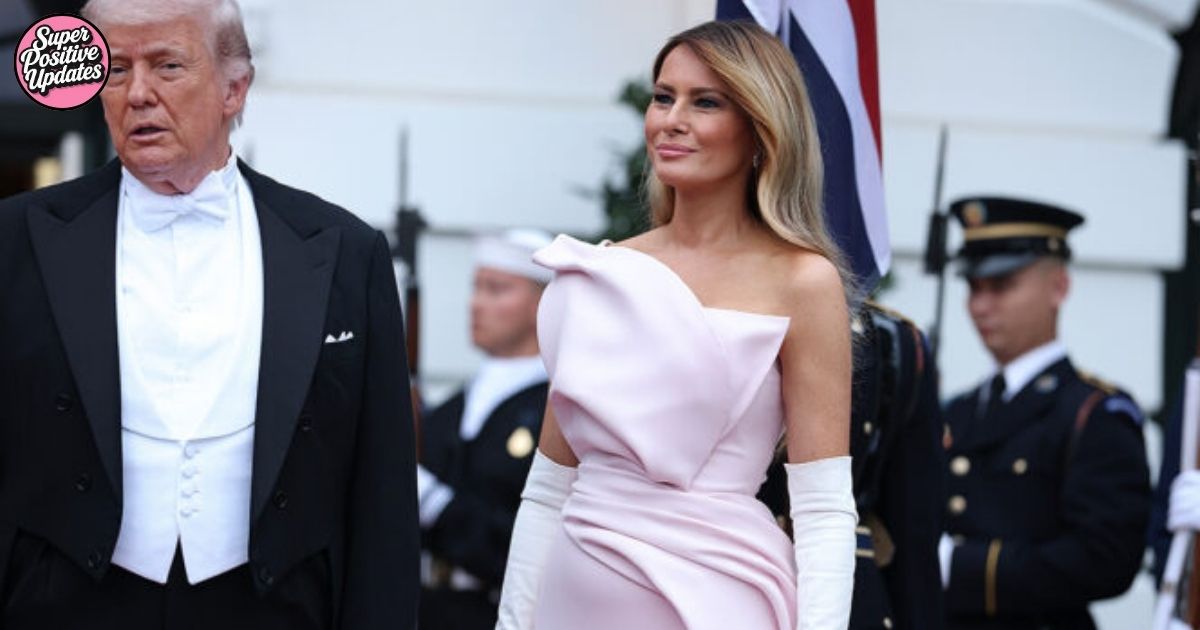
Melania Trump has once again drawn public attention, this time following her appearance at a formal state dinner held at the White House in honor of King Charles III and Queen Camilla.
The First Lady attended the April 28 event wearing a soft pink, strapless gown from Christian Dior Haute Couture, a design that quickly became a focal point of discussion. The dress, noted for its structured bodice and flowing silhouette, was paired with off-white gloves and pale-toned heels, creating a polished and cohesive look.
A Modern Interpretation Meets Traditional Expectations
The appearance has prompted conversation about how contemporary fashion choices align with long-standing traditions associated with royal state dinners. Such events are typically governed by a white-tie dress code, one of the most formal standards in diplomatic settings.
Historically, women attending these occasions have worn full-length gowns with more structured and traditionally modest designs, often incorporating covered shoulders. Color choices have also followed certain patterns, with white frequently appearing as a symbol of formality and continuity.
Against this backdrop, Melania Trump’s choice of a pink, shoulder-baring gown stood out. The design leaned toward a modern, high-fashion interpretation rather than strict adherence to traditional expectations.
Mixed Reactions Across Public and Online Spaces
Public response to the look has been divided. Some observers praised the gown for its elegance and craftsmanship, highlighting its precise tailoring and overall presentation.
Others expressed uncertainty about how well the design fit within the context of a formal diplomatic event. Questions were raised about both the structure of the gown and its suitability under traditional white-tie conventions.

Additional commentary suggested that while the look may not fully align with historical norms, it reflects a broader shift toward evolving standards in formalwear.
The discussion underscores how high-profile appearances at international events often extend beyond diplomacy, with fashion choices becoming part of a wider cultural conversation.