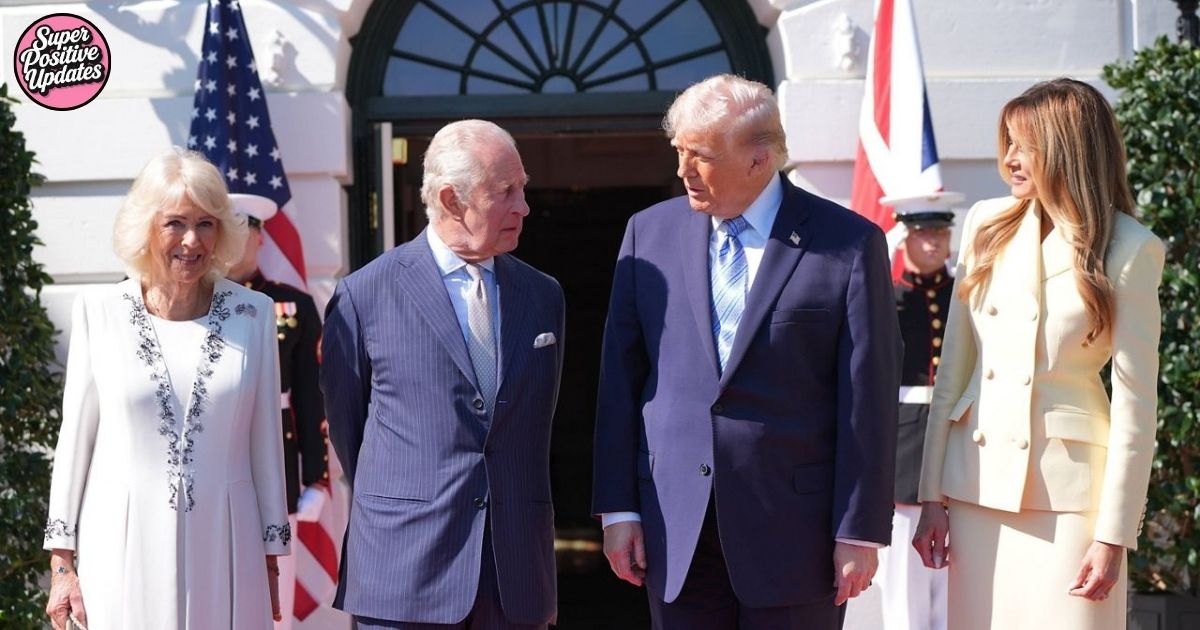
A high-profile state visit to the White House has drawn significant public attention, not only for its diplomatic importance but also for the visual presentation of two prominent figures.
During the visit, King Charles III and Queen Camilla were formally welcomed by Donald Trump and Melania Trump in a ceremony that included military honors and a structured reception program. While the event was designed to emphasize unity and cooperation, much of the public focus shifted toward the coordinated appearance of the First Lady and the Queen.

Fashion Choices Take Center Stage
At a daytime engagement held at the White House tennis pavilion, Melania Trump appeared in an off-white skirt suit designed by Ralph Lauren, paired with accessories that emphasized a refined, understated style. Standing beside her, Queen Camilla wore a pale-toned ensemble with a matching hat, creating a closely aligned color palette between the two.
The visual similarity between their outfits quickly became a focal point, prompting widespread discussion online. Some observers questioned whether the coordination had been intentional, while others viewed it as a coincidence.
Following the daytime appearance, both women attended an evening state dinner where their styling again drew attention. Melania Trump wore a custom haute couture gown by Christian Dior in a soft pink tone, complemented by minimal accessories. Queen Camilla appeared in a more vivid pink gown, maintaining a thematic link while presenting a contrasting shade.

Her jewelry also attracted notice, including a historic amethyst and diamond necklace associated with Queen Victoria, previously worn by Queen Elizabeth II during an earlier state visit to the United States.
Public Reaction and Ongoing Discussion
Images from both appearances circulated widely, prompting varied reactions. Some commentators interpreted the similar color choices as a deliberate visual message, while others raised questions about traditional expectations surrounding royal protocol.
There is no formal rule requiring individuals to avoid wearing similar colors to senior royals, though contrasting attire has historically been common practice. The perceived overlap in styling, combined with the significance of the visit, contributed to ongoing debate across social platforms.
What began as a carefully managed diplomatic event ultimately extended into broader public conversation, with fashion choices becoming a central element of how the visit was perceived.