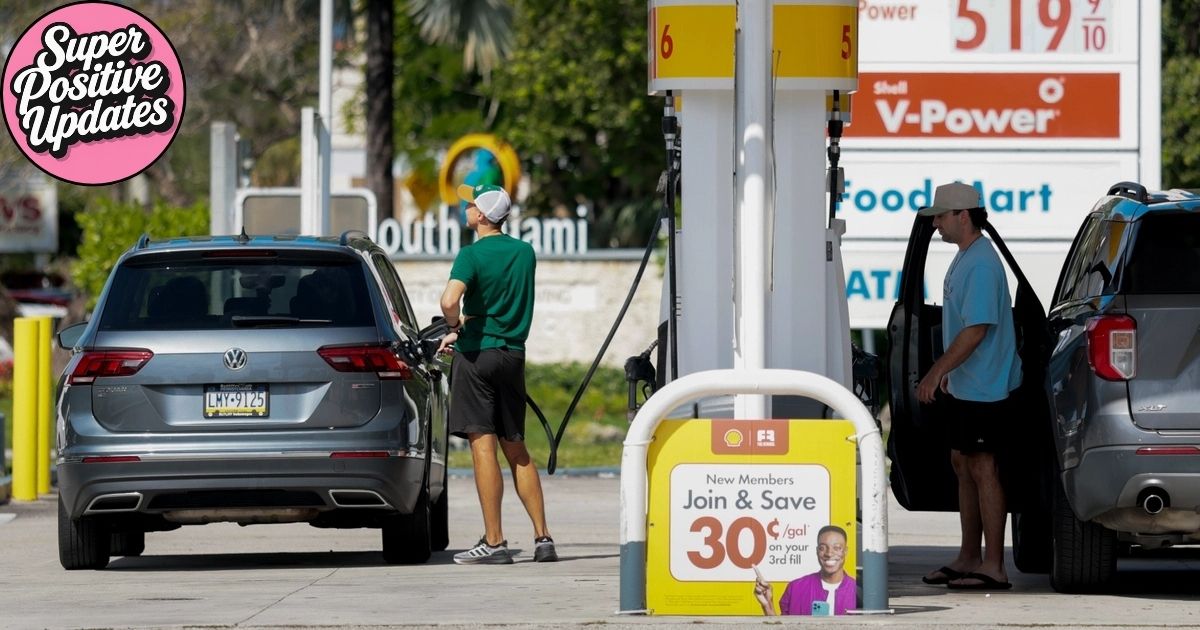
Recent comments from Donald Trump have drawn attention as fuel costs remain elevated across the United States, with broader economic pressures tied to ongoing international developments.
Energy Markets Under Pressure as Conflict Continues
Speaking on April 30 during a press event in the Oval Office, Trump addressed current fuel price trends and their connection to global supply disruptions. According to reporting from The Epoch Times, he expressed confidence that conditions could change significantly once the situation stabilizes.
“The gas will go down. As soon as the war’s over, it’ll drop like a rock,” Trump said, pointing to what he described as abundant global supply currently affected by restricted transit routes.
Fuel costs across the country have risen sharply in recent weeks. Data from the American Automobile Association shows that the national average price for regular gasoline reached $4.30 per gallon as of April 30. This marks a notable increase compared to both the previous week and the same period last year.
Independent tracking cited in the report indicates prices may be even higher in real-time. Analyst Patrick De Haan noted that data suggests a national average closer to $4.40 per gallon, describing the increase as one of the fastest in recent years.
Global Factors Driving Price Increases
Oil markets continue to reflect the impact of geopolitical tensions. Benchmark crude prices remain above $100 per barrel, with Brent crude trading near $111 and U.S. West Texas Intermediate exceeding $105.
The surge follows developments earlier this year involving military actions and disruptions affecting key shipping routes. In particular, restrictions in the Strait of Hormuz—a major corridor for global energy transport—have contributed to supply uncertainty.
According to the report, these disruptions have had a direct effect on both gasoline and diesel prices, with diesel averages rising above $5.40 per gallon nationwide.
Economic Impact and Outlook
Rising energy costs are also influencing broader economic indicators. The Federal Reserve’s preferred inflation measure, the personal consumption expenditures index, recorded a 3.5 percent year-over-year increase in March, with energy prices identified as a contributing factor.
International organizations have also weighed in on the situation. Both the International Monetary Fund and the World Bank have indicated that disruptions to supply chains and transport routes may persist even after hostilities subside.
The IMF noted that ongoing instability has affected key global systems, warning that recovery may not immediately restore previous market conditions.
As developments continue, fuel prices and energy markets remain closely tied to broader geopolitical events, with uncertainty shaping both short-term trends and long-term expectations.