On January 12, 2010, a powerful 7.0-magnitude earthquake struck Port-au-Prince, Haiti, causing widespread devastation and collapsing buildings across the العاصمة. Among them was a small medical clinic in the Carrefour district, where American emergency physician Dr. James Corbett was volunteering at the time.
According to accounts later shared in interviews, the two-story concrete structure gave way at 4:53 p.m., trapping Corbett beneath the debris. He remained conscious, pinned at the feet by a slab that immobilized him without crushing his legs. The space around him was extremely confined—approximately four feet wide and two feet high.
To his left, a narrow crack in the rubble allowed in daylight and air. To his right, there was only darkness—along with the persistent sound of a crying animal.
A Decision That Changed Everything
Corbett chose to dig toward the sound.
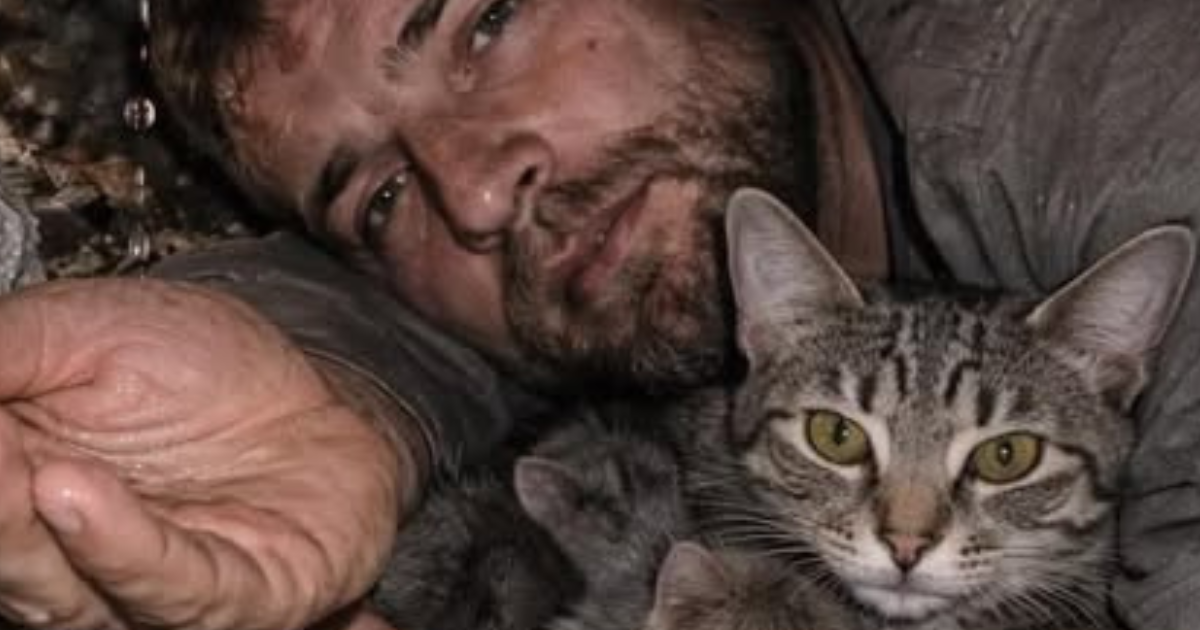
Using only his hands, he spent several hours moving debris until he reached a small void. Inside, he found a gray tabby cat and two kittens, estimated to be around three weeks old. The animal, initially defensive, eventually approached him and placed the kittens against his body, remaining beside them.
A broken pipe above intermittently released small amounts of water. Corbett collected it in his hands, receiving only minimal quantities at a time. As he later recounted in interviews, he divided the water—consuming part and giving the rest to the cat—over the course of approximately 67 hours.
During that time, he spoke aloud, describing his life in Boston, his work, and his young daughter. He mentioned that she owned a stuffed cat and that he would one day tell her about this experience.
Rescue and Aftermath
On the third day, rescue teams reached the site and detected Corbett’s voice. They expanded the opening on his left—the same side he had initially chosen not to dig toward.
Before allowing himself to be freed, Corbett ensured the animals were passed through the opening first. Only after they were safely removed did rescuers extract him.
Medical evaluations confirmed that his legs had not been crushed. However, he was severely dehydrated, had sustained a fractured wrist from digging, and suffered chemical burns on his hands due to prolonged exposure to concrete dust and stagnant water.
According to his own statements following the rescue, his first question to responders was about the cat’s safety.
A Lasting Reminder
Corbett returned to Boston approximately two weeks later. The cat and her kittens were subsequently transported to the United States through a veterinary organization involved in animal evacuation efforts from Haiti.
He adopted all three animals. The mother cat was named Port, after Port-au-Prince, while the kittens were initially named Gauche and Droite—French for “left” and “right.” His daughter later renamed them, with the mother becoming Dr. Whiskers II.
Corbett continues his work in emergency medicine. On his desk, he keeps a piece of concrete from the collapsed clinic. As he explained in a later interview, it serves as a reminder that the most obvious choice is not always the one that leads to life.
“Daylight was on the left,” he said. “But life was on the right.”