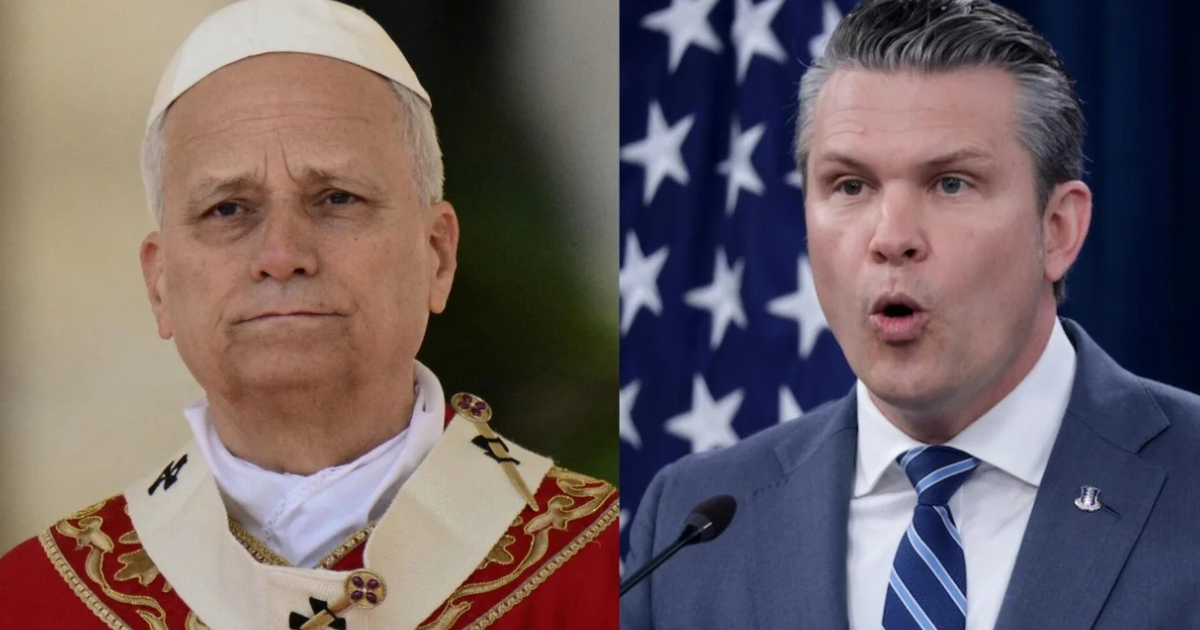
A wave of controversy has emerged in diplomatic circles following claims of a highly sensitive exchange involving senior U.S. defense officials and a representative of the Holy See. According to information described in circulating reports, a closed-door meeting at the Pentagon allegedly included a direct message to the Vatican’s diplomatic envoy, Cardinal Christophe Pierre.
As reported in those accounts, the message urged the Catholic Church to refrain from criticizing ongoing military operations and to align more closely with U.S. geopolitical interests. A statement attributed to U.S. Under Secretary of Defense for Policy Elbridge Colby suggested that American military power affords it broad global influence, accompanied by a warning that cooperation would be in the Church’s interest.
Vatican Response Signals Firm Position
The reports further claim that Pope Leo XIV rejected any such pressure, maintaining the Church’s independence from political and military agendas. Rather than participating in official celebrations in Washington, D.C., on July 4, 2026, marking the 250th anniversary of the United States, the Pope instead chose to travel to Lampedusa—a location widely associated with humanitarian crises and migration.
This decision has been interpreted, in the same reports, as a symbolic reaffirmation of the Church’s focus on compassion, peace, and moral responsibility over political alignment.
Disagreements Over War and Diplomacy
Tensions were reportedly heightened by the Pope’s criticism of military actions in Iran and his broader stance against what he described as “the diplomacy of force.” The situation underscores a growing divide—at least in tone—between moral advocacy rooted in religious teaching and the strategic priorities of state power.
The Vatican’s position, as reflected in the reported statements, emphasizes that the Church does not serve political systems but remains guided by its spiritual mission. Peace, according to this stance, is presented as a non-negotiable principle, regardless of geopolitical realities.
A Symbolic Moment
Observers cited in the reports describe the Pope’s decision to forgo a visit to his home country under these circumstances as both difficult and deliberate. It is framed as a message underscoring the independence of the Holy See and its commitment to moral authority, even amid external pressure.
While the full details of the alleged exchange remain unverified, the situation has already sparked intense debate about the relationship between global religious leadership and political power.
At its core, the episode highlights a longstanding question: can moral authority remain fully independent in a world shaped by military and strategic interests?