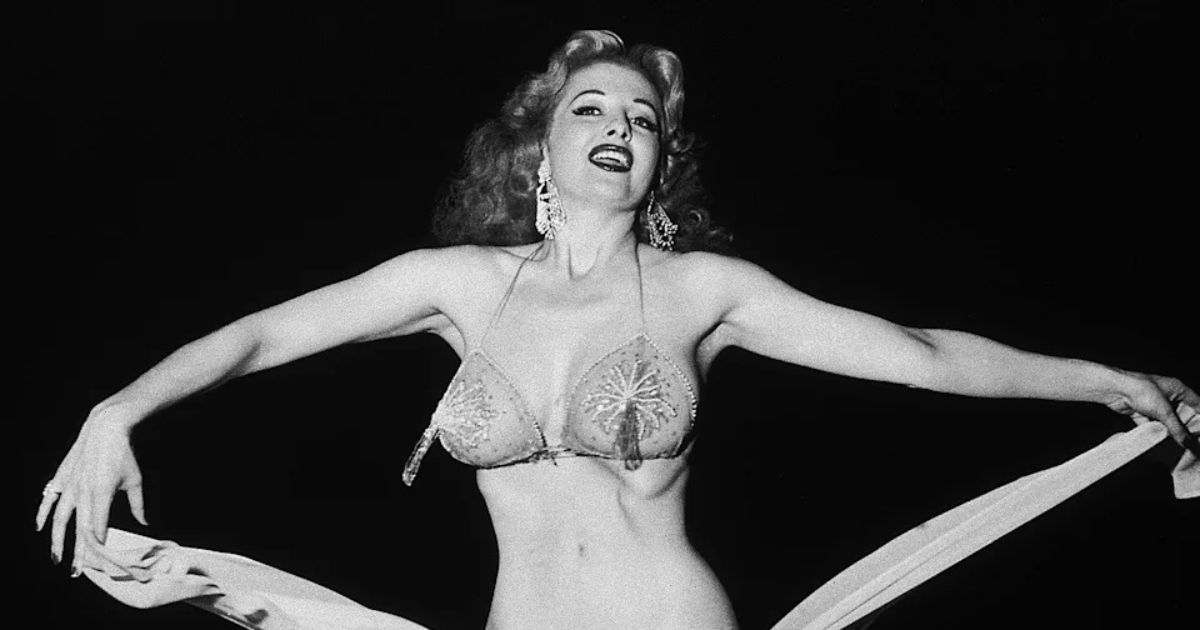
Tempest Storm, one of the most recognizable figures in American burlesque, built a career that transformed her into a defining presence in the entertainment world. Known for her striking red hair and commanding stage persona, she remained active for decades, leaving a lasting mark on performance art.
Born as Annie Blanche Banks on February 29, 1928, in Eastman, Georgia, her early life was shaped by hardship. At the age of fourteen, she left home and entered into a brief marriage with a Marine, which was annulled the following day. A second marriage at fifteen, this time to a shoe salesman, also failed to provide stability. Her ambitions extended beyond survival, leading her to relocate to Los Angeles in pursuit of new opportunities.

From Reinvention to Recognition
In Los Angeles, she adopted the name Tempest Storm after being presented with two options—Sunny Day or Tempest Storm—by a casting agent. Choosing the latter marked the beginning of a new identity that would soon gain recognition. While working as a cocktail waitress, she was introduced to the concept of striptease performance. Although unfamiliar with it initially, she quickly adapted, developing a style that emphasized control, pacing, and audience engagement.
By the late 1940s, she had begun performing on stage, and by the mid-1950s, she had established herself as a leading figure in burlesque. Her performances were characterized by deliberate movement and presentation, focusing more on suggestion than explicit display. She became known for elaborate costumes, detailed choreography, and a strong stage presence.

Her popularity led to significant financial success, with reported annual earnings of approximately $100,000 during her peak years. Lloyd’s of London reportedly insured her figure for one million dollars, reflecting both her fame and marketability. Media coverage at the time frequently highlighted her image, referring to her with the nickname “Tempest in a D-Cup.”
She shared stages with other prominent performers such as Blaze Starr and Lili St. Cyr, and appeared in burlesque films including Teaserama and Buxom Beautease, alongside Bettie Page.
Despite her public image, her personal routine reflected strict discipline. She avoided smoking and limited her diet and lifestyle choices, maintaining a consistent regimen that included specific dietary habits and regular wellness practices. She also chose not to undergo cosmetic surgery, stating that she relied on natural attributes.
Her widespread appeal occasionally led to overwhelming public reactions. In 1955, an appearance at the University of Colorado reportedly drew a crowd of approximately 1,500 students, creating a situation that nearly escalated into a stampede.
In her later years, she resided in Las Vegas, where she died in 2021 at the age of 93. Her career, which extended across more than six decades, contributed to shaping the visual and stylistic direction of burlesque performance.

Modern performers, including Dita Von Teese, have cited her influence, reflecting the continued relevance of her work. Her legacy remains tied not only to her performances but also to the broader cultural impact she had on the art of burlesque and stage presentation.